Love Languages

14 02 2011

During our 18 years of marriage, my husband and I have read many relationship books to help improve our marriage. One of the books that have had an exceedingly profound impact on our lives was “The Five Love Languages” by Gary Chapman. With Valentine’s Day here, I thought I would share what we learned.

Everyone has a love language; you may have a primary and a secondary. Many times, we will try to communicate our love to our partner based on our own love language and then we don’t understand why this person doesn’t feel loved by us. For example, my husband’s love languages are quality time and physical touch. For me, words of affirmation and acts of service are my love languages. When I buy him cards (which would be “words of affirmation–my love language), although he appreciates them, they don’t make him feel deeply loved. When we would quality time together, I was fulfilling his need, however, mine went unnutured. When he let me sleep late without me having to ask, or would tell me how proud he was of me for doing XYZ, my heart swelled. At that moment, I never felt more in love with my husband. That is how you can recognize the differences between the love languages.
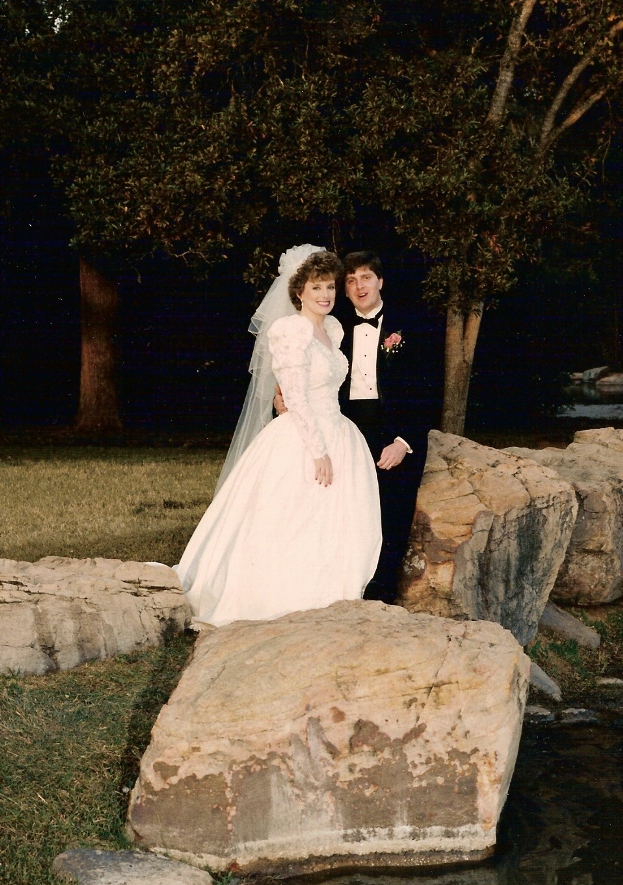
My husband and me on our wedding day

My husband and me on our wedding day


After you read the book, you think to yourself, now that just seems too obvious, why didn’t I get this? Recognizing what your love language is and making an effort to do that every day are two very different things.

He also has a chapter for parents and their kids. You often hear parents saying, “I raised them exactly the same way and this one turned out differently from this one.” Likely the one who turned out well was the one whose love language was being met. Let’s say child 1 likes quality time and child 2 likes words of affirmation. If you spend quality time with both of them, child 1 is going to feel loved, but if you never say affirming words to child 2, they will appreciate the quality time, but won’t feel truly loved.

Love Language #1:  Words of Affirmation. These are verbal compliments or words of appreciation, like “You look sharp in that suit.” “You must be the best potato cook in the world. I love those potatoes.” These are encouraging words (how can I help?), kind words, and humble words. If this is your significant other’s language, then help improve your relationship by writing “Words are Important” as a reminder, writing down all the words of affirmation you gave to your spouse and then reviewing it at the end of the week to see how well you have done (or not). If you are clueless as to what to say look in the media and observe people in conversation and write down things people say. Write a love letter, paragraph, or sentence, compliment your significant other in the presence of parents or friends, look for your significant other’s strengths and tell him/her how much your appreciate those strengths, tell your children how great their mother/father is.

Love Language #2:  Quality Time. Go places together, do things together, sit quietly together (not necessarily together but at least in the same room). For example, a father sitting on the floor rolling a ball to his child, the focus is not on the ball, but the child. If the father, however, is talking on the phone, then his attention is diverted and this is not being together. It also can include quality conversation, sharing thoughts, feelings and desires without distractions. If this is your significant other’s language, some suggestions are to ride bikes together and go to a park and watch the ducks, roll on to the rose gardens, find out what each other’s favorites plants are and why. Surprise your significant other with an impromptu lunch, ask him/her what their favorite activity is and join her/him in this activity and learn more about it. Ask questions “Who was your best and worst teacher at school and why? and other questions like that. Have a picnic in the living room and talk like you did when you were dating.

Love Language #3:  Receiving Gifts. Gifts must be purchased, found or made. Some gifts are expensive, others are free. If this is your significant other’s language, you could stop along the roadside and pick a bouquet of wildflowers or you can make a card. There is also the gift of self.

Love Language #4: Acts of Service. This is when your significant other does things for you without having to be asked. If this is your significant other’s language, you should ask what four things that you could do that would make her/him feel loved. If they are within reason to you, then you should do them with joy and with love, not done out of fear, guilt or resentment.


Love Language #5: Physical Touch. This would include holding hands, kissing, embracing, etc. Obviously, if this is your loved one’s love language, you need to do more of it. However, the author cautions not to think that a desire to have sex means your love language is physical.
 

To help you figure out what they are, he says to ask yourself these questions:

1. What does your significant other do or fail to do that hurts you most deeply. The opposite of what hurts you is probably your love language.

2. What have you most often requested of your significant other? The thing you have most often requested is likely the thing that would make you feel most loved.

3. Finally, in what way do you regularly express love to your spouse? Your method of expressing love may be an indication that that would also make you feel loved.

What is/are your love language(s)?



My Favorite American Idol Memory

13 02 2011

I want to thank the Fox VIP program for sending me some awesome gifts (pictures below).


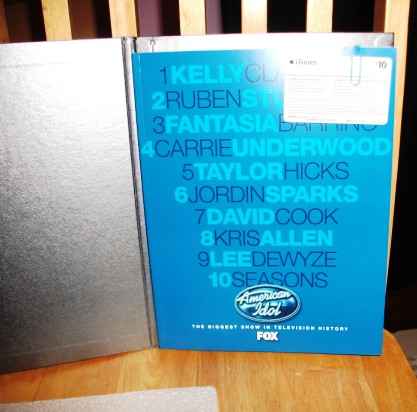
American Idol Yearbook From Fox VIP

American Idol Yearbook From Fox VIP

A 10-year shelf life is a long time for an American television show, even more rare for a reality show. This year I was determined not to watch American Idol. It was hard for me to watch the show in season 9 in the shadow of the unique talents of Adam Lambert from season 8. It was difficult for any of the season 9 contestants to win me over, although some eventually did. When I heard Simon Cowell was leaving, I thought that was the death of American Idol.


From Fox VIP, an ITunes card to download more Idol music

From Fox VIP, an ITunes card to download some more Idol music

As much as I love Steven Tyler and Jennifer Lopez, I never pictured them in a judging capacity. I missed the first night of auditions. While I was watching Fox 26 Houston 5:00 news the next day, Joey Guerra, the music critic from the Houston Chronicle, was on and he said the judging vibe was very different this year. Knowing I was likely going to regret my decision, and adding yet more television viewing hours to my already packed schedule, I tuned in. He was right. The judging screamed of Nigel Lythgoe’s handiwork; it was very similar to the So You Think You Can Dance auditions, another show that I love. We will see how this all turns out.


From Fox VIP, autographs of the principals.

From Fox VIP, autographs of the principals.

In the meantime, I have two favorite memories of Idol. My favorite memory is the one that lives in my imagination where Adam Lambert is declared the winner of American Idol Season 8. While Kris Allen showed a lot of growth during season 8, Adam Lambert was the standout global superstar. I consoled myself knowing how successful Chris Daughtry went on to be by putting in the hard work not only in his music, but in building his fan base. Adam would be just fine. Tonight, he will be at the Grammy’s, having been nominated in the category of Best Male Pop Vocal Performance for his hit song “Whataya Want From Me.” The category has some stiff competition.


Adam swag from his concert in Houston

Adam swag from his concert in Houston

My favorite memory that became a reality was the night David Cook won. Having been so invested in Chris Daughtry in season 5, as a fan I felt like the world of rock deserved this moment. Somewhere in the weeks leading up to the season 7 finale, David Cook transformed into this phenomenal talent. From the beginning of the show until the end of the show, he showed more growth to me than David Archuleta who, while amazingly talented, remained consistent.

The irony of that statement does not escape me: The same thing I praised David Cook for in season 7, I faulted Kris Allen for in season 8.

I dialed relentlessly that evening to make sure that my votes indeed counted. I waited with visibly shaking nervous twitches, just as those famous YouTube teen girls did, waiting to hear David’s name being called, David….Cook, not Archuleta. I was in my office doing some work for my employer. The howl that erupted from this office made my husband come running in to see what had happened to me. He thought I had hurt myself, that I was laying on the floor, having hit the wall or something. HE WON!!!!!! “Good God”, he replied before walking out of the room, shaking his head in a look that displayed mild amusement and mild disbelief.


David Cook Wins Idol

David Cook Wins Idol

So my readers, over the last 10 years what has been YOUR favorite American Idol moment?


Getting Tina Stull A Sponsor

11 02 2011

The first question you probably have is, WHO is Tina Stull? 


Tina Stull and Team Troops

Tina Stull and Team Troops


I was introduced to this remarkable woman by a Fox 26 Houston chatter/blogger friend, Robert.  I do not remember if he suggested I follow her on Twitter, or if he suggested she follow me.  When I went to her website to find out more about her, her inspirational story touched me.  You can click her picture above to go to her site.  She had been diagnosed with T-cell lymphoma and was given 3 years to live.  Racing was one of the items on her bucket list.  Before receiving any treatment, when she went back to the doctors, they told her the cancer was not there any longer.  Having received a second chance at having a long life, she continued to pursue racing “as a National Hot Rod Association Super Comp Dragster driver” and has become a motivational speaker by “helping people everywhere overcome their obstacles and reach for their dreams.”  She is not just a speaker.  Tina is in there with her sleeves rolled up, whether it is helping someone she personally knows, or helping our troops. 

I will be the first to tell you I know nothing about the racing world.  This woman inspires me and makes me want to learn more about it.

While following her Twitter feed, I noticed that she is looking for sponsors.  While I have no connections to be able to help her in that department, I decided to do what I do best:  Start a fan campaign. 

This is quite a different thing than my usual fan campaign, which is generally to save a favorite show (or be a participant in someone else’s efforts).   However, I have come up with some ideas:

1.   Watch Tina’s Blue Tool Crew videos on YouTube at http://www.youtube.com/watch?v=BpzWhazIo0A   (that will lead you to the first one).  Subscribe to them.  Go watch all the others.  Leave comments.  Right now there are only 6 comments on some.  Tina Stull fans can do BETTER than that.  Visit daily.

2.  Follow @bluetoolcrew on Twitter, and let them know how much you love Tina Stull and her spots.  Visit daily.

3.  On Facebook, look for Blue Tool Crew and like their page.  Spread your words of love for Tina on their site.  Visit daily.

4.  Follow @jumbies account to help Tina show that she has a great fan support base.  Leave a comment daily.

5.  Go to Tina’s web site often to see about other ways you can support her and our troops. 

I want to thank Tina for the kindness she has shown me and my family.  I have a child with autism and have begun running their Twitter account.  All I had to do was ask her to ask her fans to follow it Twitter account and poof, we had a ton of followers.  The Twitter feed is to share information about autism and the treatment method of applied behavior analysis, but to share testimony of the children’s lives that were transformed once coming there.  For me, if I can return the kindness and try to whip up an old-fashioned fan campaign for her, let the fun begin.


Women of Sci-Fi Pictures

3 02 2011

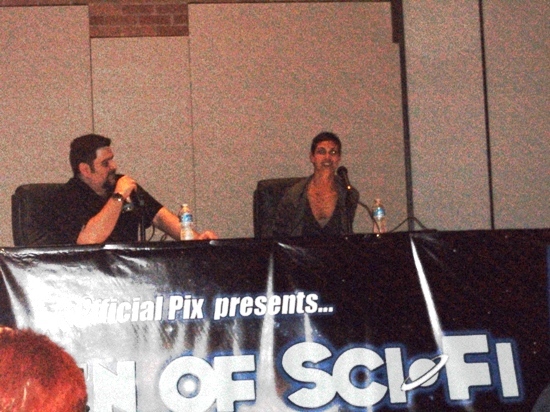
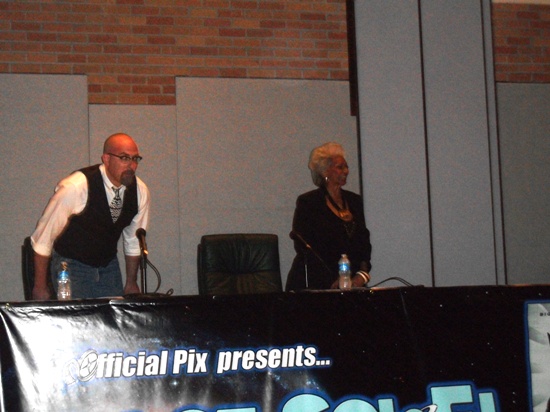
I’m still working on my experience at my first-ever convention, but in the meantime, enjoy these pictures:

Cylon

A Cylon from the original BSG


Cylon and a fan

Original BSG Cylon and a fan.


Great fans

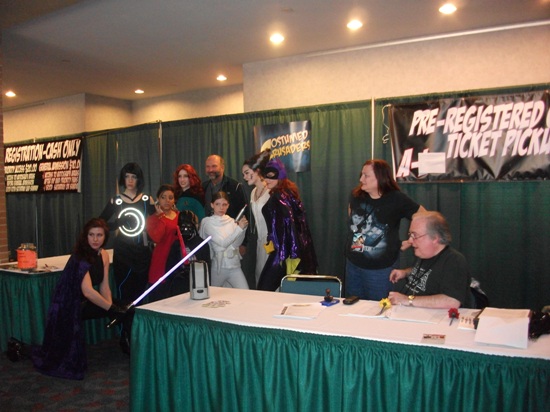
Great fans in character


Ghostbusters

Who'ya gonna call? The guy on the left looks like my previous church pastor


Sean

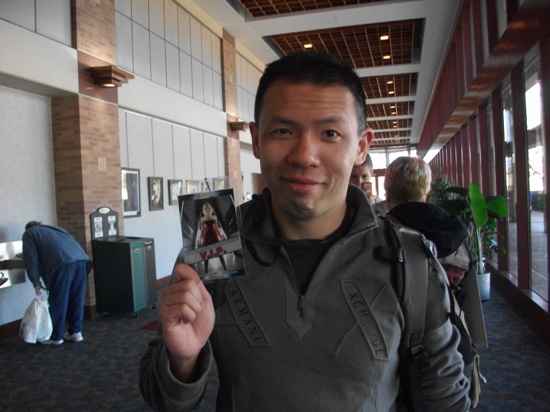
Twitter buddy Scoobykoo flew in from Vancouver for the occasion.


TShirt

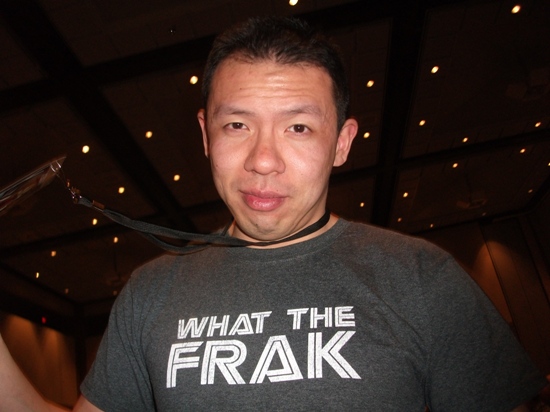
Love his T-Shirt.


MorenaBaccarin1

Morena2

More Morena Baccarin


Morena3

Even more Morena


NichelleNichols

The awesome Nichelle Nichols. By far, her Q&A was the best.


TriciaKatee

Tricia Helfer & Katee Sackhoff. Their Q&A was the most hilarious.


TwitterBuddy

Later on, we met up with Twitter buddy @TiffanieJane at the hotel


AlainaHuffman

Alaina Huffman of Smallville & Stargate Universe. This Q&A was more personal to me because of my SGU love.


Maddie

What'cha bring me, mom? Krispy Kremes? I remember these from last year.


Autism and the Vaccine Controversy, Part 2

20 01 2011

Patrick’s Story Continued

Once Patrick was diagnosed in 1997, I learned everything I could about autism. Truth be told, there wasn’t much on the internet yet about it. When kind people were sending me information, the chances were high that I already read about it. There was an interesting site I found that described different versions of autism. Two of the things on the list were “diet-induced” autism and “Candida-induced” autism (or autism that was induced by a systemic yeast infection. Long before I knew about Dr. Wakefield, I was already reading peer-reviewed research on the role of diet and autism.

When we returned to our pediatrician after the vaccine, and exclaimed, “Where did our child go?”, she ordered an ABR (auditory brain stem response — to check for deafness caused by the vaccine) and some initial lab work which returned showing high liver enzymes and a high platelet count. His pediatrician told us this indicated that his liver was overburdened, processing out some toxicity. This was 2 months after his MMR/DPT/polio. “This happened within 24 hours of the vaccine.  There has to be a connection.”  There was a long pause and a deep breath: “It would correlate” was the response.  A more comprehensive battery of testing was ordered.  While we were waiting to get this back, the psychiatrist who diagnosed him officially with autism also ordered a Fragile X and a few more lab values.   The heavy metal toxin screen came back indicating that he had high levels of zinc, nickel, mercury, aluminum. He had low levels of magnesium, potassium, iron, manganese, silicon, and cesium. He had a high calcium/magnesium, zinc/iron, zinc/cadmium, levels and low calcium/copper, calcium/zinc, and iron/copper. I know that probably is Greek to most people. Low magnesium levels may be implicated in fatigue, muscle cramping, and depression (hyperirritability, hyperactivity, muscle twitching and nervousness as a response). Low potassium may indicate fatigue and stress, effects neuromuscular response, ion transport, and energy production. Low iron most people are familiar with being associated with iron-deficiency anemia whose symptoms are weakness, fatigue, paleness, palpitation, headache and shortness of breath. High zinc levels were associated with poor utilization and may be preliminary to zinc depletion. Pyridoxine needed to be added to help maintain proper zinc levels. Low manganese levels could be seen in connective tissues disorders (this was fascinating to me because of our family history of autoimmune disorders). Low vanadium levels may affect bone morphology and aortic cholesterol. Low silicon levels may be associated with decreased calcification of the bones and teeth and abnormalities of the articular cartilage and connective tissue. It is a biological cross-linking agent in collagen and connective tissue. High nickel levels show high tissue destruction, especially in epithelial tissue. Mercury and aluminum are neurotoxins. 

I learned about a group called ANDI (Autism Network for Dietary Intervention) from the Developmental Delay Registry website which was founded by Lisa Lewis and Karyn Seroussi, parents of children who had changed dramatically through careful implementation of home-based dietary programs. They helped other parents by showing them how to support their child’s immune system, combating yeast and bacterial overgrowths, eliminating certain foods. “Recovery from PDD” founded by Jean Lash had a child with autism who was then considered recovered by professionals. “The Association for the Promotion of Better Health” was founded to help parents interested in homeovitics which aimed to remove a child’s toxin burden.

The file I have on autism is about 2 feet deep just in the research papers I chose to print out. While other people were reading for pleasure, I was reading on how to heal my child.

I journeyed to the site of the highly regarded Dr. Bernard Rimland of the Autism Research Institute. His son had been diagnosed with autism when it was still considered very rare. He earned credibility in his field when Dr. Leo Kanner, a psychiatrist who first identified autism as a syndrome, wrote the foreword in Dr. Rimland’s book which put autism as a neurological disorder, not a psychiatric one. Dr. Rimland went on to co-found the Autism Society of America. His site had extensive information on the biomedical treatment approach to autism. We tried DMG (dimethylglycine) with Patrick but he seemed to have a reaction to it. With no biomedical experts in our area, I decided to place a call to them to see if they had heard of anything since it seemed relatively benign. The woman actually put me through to Dr. Rimland himself. Things were different back in 1997. He suggested that perhaps Patrick was reacting to an additive in the product and gave me a few places where we could purchase it in a pure form. We also put Patrick on a special vitamin product made specifically for children with autism called Supra Nu Thera from Kirkman Laboratories because it was researched that children with autism tended to have low levels of vitamin B and zinc. The list of things we tried for Patrick would blow your mind and I honestly don’t have enough space here to list all the different things and the different combinations.

I have meticulous notes that I have kept over the years. One of these includes a note for Patrick’s well visit in December of 1997 when he was 2 years old. He was being seen twice a week for occupational therapy for 45-minute sessions. Speech therapy saw him twice a week for 45 minutes. He was no longer in day care and home with me and making better progress. I was excited by the following: “Will tolerate us washing his hair now.” “Isn’t catatonic in his winter coat this year (which proves that I saw signs of his vaccine-injury long before his 15-month injection when he totally left us). “Gave me 3 half-hugs in the last 3 weeks.” He still wasn’t stacking things, talking, imitating, feeding himself, drinking from a cup, eating regular food, not pointing to things, not engaging in pretend play. Our concerns were about a rash on his face, biting his fingers. Things that made him dry heave and eventually throw up: A mylar balloon, Christmas tree, a different pacifier, or if he chokes on his own. He could only eat stage 2 baby food. The pediatrician, not knowing a lot about biomedical approaches, but certainly seeing the progress Patrick was making with whatever interventions we were trying, supported us in our efforts. If we needed a prescription for a certain item, all we needed was to send her some case studies to look over and she would let us know if she felt comfortable or not doing it. Sometimes she did; sometimes she didn’t. If she did not, we went on to try something else.

I read testimony from Washington, DC about parents whose children had reactions after the vaccine that were very similar to ours, but more than 20 years previous to my child’s injury.

I need to skip over how we decided on which home program to do because it is not relevant to the topic of vaccines except that the program we did choose had biomedical education as part of its curriculum. After Jeff attended the start-up program in early 1998, we received a letter dated May 1998 from other parents who attended who told us about how changing their child’s diet made huge improvements for them.

In November, 1998, our psychiatrist wrote us a letter for something that made us feel great. “I have examined him over the last year and worked with he and his family regarding guidelines and advance for Patrick. Over the course of our relationship, Patrick has made substantial gains given his parents high level of motivation and interest in his care. It is my opinion that given his parents’ motivation, interest and hard work, Patrick’s prognosis is excellent.”

In January of 1999, we attended our intensive program where we both learned the importance of diet in recovery from autism. Yes, you read that correctly: RECOVERY FROM AUTISM. We also had lunch with the now-recovered child who went on to graduate from Brown University. Can you believe that the medical community was so threatened that a mere parent could figure out a treatment approach that was considered quackery by modern medicine that this family received death threats? We asked him if he remembered any part of his life during autism and he told us of remembering swirls in yogurt.

It was then we worked on changing Patrick’s diet, switching him from his sugar-laden soy baby formula to rice milk. We turned his diet into a gluten-free, casein-free, sugar-free diet.  The child looked like he was on morphine (see picture below) before we started this diet.

Patrick in late 1998 right before we started the diet Jan 1999


Previous to the 15-month immunization, he looked like this:


Patrick with chicken pox March 1997 right before MMR

Patrick with chicken pox March 1997 right before MMR/DPT/polio


By the year 2000, Patrick’s lab values were back to normal. However, the damage was already done.   But by 2000, he was no longer getting sick so often.   No more reflux, no more colds, no more ear problems, no more sinus infections.  Several times we went a whole year without stepping foot in a pediatrician’s office for so much as a cold.  When going for a well-check, the nurse was shocked, “Oh, you haven’t been here in….a year?”  And he didn’t look like he was on morphine anymore. 

Our pediatrician gave us a permanent immunization waiver. In 2002, she wrote this: “Please continue Patrick’s medical exemption from further immunization boosters. For the foreseeable future, the possible consequences of further vaccination appear to outweigh the possible benefits and I have recommended to his mother that we not pursue further immunization at this time. I anticipate this exemption for the polio booster to be indefinite.”

In part 3 of this series, I’ll give you a look at what was being documented at the time in case studies.


Autism and the Vaccine Controversy, Part 1

9 01 2011

Autism and the Vaccine Controversy, Part 1: Understanding my son’s history.

While I respect your viewpoints about vaccines not causing autism, I would suspect most of you having such an opinion do not have children with autism. I ask that you also respect mine. I would also suspect that many of you have not done actual reading of the real peer-reviewed research on both sides of the issue, but rather are regurgitating what the media is reporting. The media are not the journalistic pioneers they used to be; rather, they read from press releases sent out to fill the 24-hour news cycle. Many of those press releases come from governmental agencies.

Contrary to media hysteria, most parents with autism are not in favor of a no-vaccine society. We are highly intelligent mothers and fathers who were forced into a situation where our children were ill or changed or both, and like any good parent would, set about to find what happened. One minute they seemed fine and then the next they were just gone. The media makes us out to be psycho parents who are out to harm society by choosing not to vaccinate any further.

In order for you to understand how I came to the conclusions I have, you must understand Patrick’s history.

When Patrick was born on Dec 17, 1995, we thought he was two weeks early. The midwife felt because he was peeling he might actually be more like two weeks late. Our midwife thought we were having a girl all along (we never wanted to know; there are very few surprises left in life). Up to the moment he popped out, she was saying, “Come on Katherine Elizabeth.” She said, “Oh my, Katherine has a BLEEP.” And I remember saying, “Oh, honey you have a little buddy!” before I passed out from sheer exhaustion, and well, I was hemorrhaging, too, so that probably had a little bit to do with the passing out. It was quickly controlled though.

I had an arduous labor with contractions starting 8 minutes apart at 8:00 a.m. on Saturday. I wasn’t dilating. Five-minute-apart contractions occurred for almost 23 hours. I chose to deliver at a free-standing birthing center; however, I asked to be transferred to the hospital because I felt something was very wrong during labor. Call it mother’s intuition. The midwife didn’t transfer me and convinced Jeff that I was delusional. Twenty-nine hours later, Patrick was born blue and limp, and had no reflexes (an Apgar of 3 at 1 minute, 9 being the top score). He received what is called blow-by oxygen and he pinked up, but he still had no suck reflex. With an Apgar of 3, a baby would be spending some time in the neonatal unit of a hospital. Despite the fact that he wasn’t able to breastfeed, I was sent home six hours later. It wasn’t until 9 years later that anybody ever said the words “cerebral palsy” to me (due to birth trauma and lack of oxygen). He left the center with an Apgar of 8 at 5 minutes (9 is the top score). The lactation consultant met us at our house at about 9 p.m. in the evening.

When I came back for my followup visit the next day, she told me how disappointed she was in me with my labor because she had had high hopes for me. I told her I felt completely abandoned by her. A few weeks later she was to blame my history of sexual abuse on my prolonged labor, not on the fact that she went off and went to sleep and left Jeff and I totally alone, two people who had no clue what we were doing. Later I found out from the chief of staff at a local hospital that no physician in the area wanted to be associated with her because she made poor decisions. I wish I had had this information prior, but we have to deal with the choices we make and move on.

The first week at home was horrible. He wouldn’t sleep. I wasn’t producing any milk. By the fourth night of no sleep I was getting close to being psychotic. My lactation consultant used a hospital pump to pump me and only 1/16 of an ounce was coming from one breast; 1/32 of an ounce from the other. While others were saying I wasn’t adjusting to motherhood very well, all this time my baby was starving. We got some soy formula into him and he became the normal baby. It was a great Christmas present (his jaundice also resolved with the intake of formula). Meanwhile, I was getting worked up for a pituitary tumor.

On January 3, 1996, he received his first injection, a hepatitis B injection. It was then he started screaming for 18 hours a day. This becomes a very important fact later on. The only thing that comforted him darkness, being held so tight Jeff and I had to wear wrist splints from our wrists being so hyperextended (he wasn’t sucking so we had to hold his pacifier for him) or moving in the carriage. I started walking 3 miles a day just to get a break from the constant crying. That pregnancy weight came off VERY fast.

On Feb 21, 1996, he received his DPT, Hemophilus influenzae shot #1, his second hepatitis B injection, and I opted for the IPV (inactive polio vaccine) because I was immune-compromised and I heard the oral polio could put me at risk to contract polio with my immune state. The crying was much worse.

On April 17, 1996, he received another DPT, another IPV, another Hemophilus influenzae B shot (also known as HIB).

Two months later, in June of 1996, he received another DPT, this time an OPV, his third HIB and his third hepatitis B. This child was still screaming. I walked an intensely fine line bordering on insanity. I was on production at work so when I wasn’t typing, I wasn’t making any money. My husband was trying to work late to make up for what I was not making trying to deal with this screaming child all day long. We had no family to help close by to give me a break. They kept saying colic; this was NOT colic. My friends who had children who did have colic observed him agreed with me.

In September he got his first MMR. These immunizations play an important role later on (the mercury preservative thimerosal was in all of them).

By October, he seemed to be better. His milestones were behind, but that didn’t surprise me at all with him doing nothing but crying. My pediatrician suggested the Early Childhood Intervention program that was a state-based program that could get him OT, PT and speech help. By about February, I was watching the OT bouncing him on a ball and I said, “With no disrespect, how is that helping him with his gross and fine motor delays.” She said, “Oh, he has a sensory integration disorder.”

I scoured the internet searching this phrase. Just about every time, I was led to a site about autism. He wasn’t eating solid food still (now we know it was because the cerebral palsy affected his mouth muscles greatly).

In March, he got chicken pox and had an eardrum rupture, meaning antibiotics, which means his immune system was a bit depressed. In April, he got his second MMR, DPT and polio, and he disappeared. It was THAT abrupt. The affect of his face changed. I noticed he wasn’t responding to us; it was that quick. We thought maybe he had a vaccine injury that caused him to be deaf. We would throw phone books behind him and he had no startle reflex.

When I was cooking for Easter and I told Jeff to keep an eye on him. I was at the sink with the water running and talking with a friend (Jeff was talking to her husband in the other room). Patrick stealthly came into the kitchen and put his hands up on the oven, the outside of which was very hot and he started to cry but his hands didn’t move. Anybody knows that if you touch something hot, your hand or finger automatically pulls away. It was the first evidence I had of him possibly being brain-injured. Fortunately, we grabbed him (my friend was a nurse) and we held his hands under the water, acting quickly enough to stop any permanent damage.

I kept reading, scouring the internet. There wasn’t as much out there on autism as there is today and I read it all. I thought he had symptoms of autism and that everything I was reading said it couldn’t be diagnosed until he was 2 or 3. I told Jeff that he was to mark this day when I said it because this child would be diagnosed with autism. Jeff told me I was reading too much.

Jeff’s best friend’s dad died in May of 1997 and he went to the funeral in Florida. His friend’s wife had twins 3 weeks before Patrick was born. When Jeff came home, on the ride home from the airport, he started crying and said after observing his friend’s twins, something was indeed very wrong with Patrick and we needed to get him evaluated.

We were referred to a great doctor. In May or June of 1997, Patrick received the diagnosis. It didn’t matter to me that he got this diagnosis; my main mission was “Okay, what do we do now.” All I wanted to know is what we needed to do to treat this.

At the time he was diagnosed, the incidence of autism was 1 in every 10,000 children; the statistic today is 1 in every 91 children. It is at epidemic proportions. People will say, “This doesn’t affect me, so I have no reason to learn about it or even care about it.” It does affect every single taxpayer in this nation now and in the future.

So this gives you background information about what the first 15-18 months of life were like with our son. In part 2, I’ll discuss how we began discovering the links between vaccines and autism.


Kinecting Times

3 01 2011

I have never played on a Nintendo Wii. We have been an XBox family for a very long time. This year, XBox unveiled their new technology, Kinect, formerly known as Project Natal.

With the combined monetary gifts for Patrick’s birthday and Christmas, we thought this might be an excellent gift for Patrick this year since he was playing on a Wii at school. If he needed to have a controller in his hand, we had many in the house for various other electronics we could substitute. With Patrick’s sensitivities to people touching him (because of his autism), it is going to be something that will take a long time to nurture.

Jeff got it all hooked up and played some games on his own. When I became available that day, and I got a taste of what this new toy was about, it was like catnip. It is now My Precious. The fierce competitor in me re-emerged, a part of me I haven’t seen since my high school days. I was playing to WIN; however, it sucked all the joy out of my husband’s playing. I said, “If you aren’t playing to win, then WHY BOTHER?” He said, “How about for the enjoyment?” I pondered that for the moment and quickly discarded it, “No. Playing to win IS my enjoyment.” Game after game, I played as if I were playing the games in real life. And game after game, I won.

Kinect Sports

Now this would not mean so much unless you knew that my husband works out 1-1/2 hours a day at the gym. Me? With my fibromyalgia and body pain as a result of increased intracranial pressure, I have to be very careful about my exercise. Sometimes I cannot even exercise aerobically because it increases my intracranial pressure. With the rush of adrenaline going through my body I was feeling JUST GREAT. However, by the next afternoon, my back was hurting me a tremendous amount. Then it dawned on me that my exercise was not virtual; it was quite real.

The second night, we played again, and I remained undefeated. After a valiant try and both of us working up a sweat as we volleyed the ball back and forth in table tennis, I won 15 to 13 (had to win by 2 and it was a very close game). We decided to try boxing. Having enjoyed immensely virtually shooting Jeff in Call of Duty Special Ops Deathmatch Split Screen a few nights previous to this, I knew this would be a treat. The bell rang. I knew I didn’t have endurance on my side, so I went balls out, as if I was fighting for my life. His avatar was on the ground. All I heard him saying was, “Huh, what?” His avatar got back up, the bell dinged, and in less than 30 seconds, I knocked him out in a TKO. He thought it was his avatar that was doing the damage to my avatar, but it was quite the reverse. I could barely breathe–but it was from my hysterical laughter and not my aerobic effort. I told him I had been watching too many James Bamford stunt moves–quick, fast, and deadly.

The people who created Kinect must have thought of every possible contingency. As my heel hit the front of the couch and I fell backwards, I did not realize I had a bowling ball in play. So when I got up, my arm went flying, as did my virtual bowling ball, flying into the virtual crowd, complete with screams and glass breaking. The commentators even had something to say about it. Once again, I found myself in a ball on the couch hysterically laughing. I am now awaiting my virtual lawsuit. It was that game, however, that broke my winning streak.

It was on to track and field for awhile where Jeff schooled me on the finer points of hurdles, javelin, discus throw, a 100-meter dash, and the long jump. The entire time I was whining about how unfair this match up was. My kryptonite. I suddenly longed for the days when I was 16 years old and running a 7-1/2-minute mile. Soccer turned into one, long arguing match. It reminded me a great deal of our times in Splinter Cell co-op or the previous Call of Duty games.

Last night, we decided to ease Patrick back into lesson number 2. He did better with the touching, and actually understood when I asked him to hold his arm up in the air, but by frame 5 of bowling, he started to cry. It broke my heart. Sometimes it is hard to tell when to push him for more and work through the tears and when he truly has had enough. He sat back down and enjoyed watching Jeff and I play. When I took a break on the couch, he came over, curled up in my lap and fell asleep.

On its way to my mailbox soon is Kinect Fitness. I’m looking forward to the yoga and tai chi programs.

Kinect Fitness

Kinect gets two thumbs up in my book. It is great not only for family fun and entertaining friends, but also for fitness, especially for those people, like me, who have gotten out of shape over the years.


Reflections on 2010

30 12 2010


Reflections of 2010


As we near the close of 2010, most of us look back and reflect on the year, vowing to make changes in the next year. I have never been big on making resolutions. Oftentimes we make resolutions so impossible to achieve, we set ourselves up for failure as soon as we write them and commit to them on paper (or in our heads). I downsized from resolutions to a “it would be nice if…” list and downsized from there to a “why bother” list. As the year progressed and I saw opportunities for growth and change, of course I took those paths. Perhaps it is the free spirit in me that did not want to get tied down to a list, wanting to bend and move the way a tree does in the wind.

Most of you who know me can already guess what the worst part of 2010 was for us.  Our relationship with Conroe Independent School District and its administrators. The corruption of these people runs deep, even a 2007 lawsuit brought against them for political racketeering and a violation of the false claims act.  

 The second worst part of 2010 was linked to that relationship and it was my health. Despite a pleading letter from the chief of rheumatology at three different hospitals in our prestigious Medical Center of Houston, a doctor who had treated me for 11 years, they continued to escalate the situation.  At one of our last meetings, I had a neurological event which landed me on the ground, unresponsive.  Do you think they called me an ambulance?  Nope.  They got a wheelchair, wheeled me in, let me rest for an hour and then wheeled me in with a wheelchair to the meeting, a meeting I have very little recollection.  Thank goodness both sides tape-recorded the meeting.  You can hear me slurring my speech, pausing for no particular reason, talking and making absolutely no sense, yet they still did not think anything was wrong.  They even knew about my pseudotumor cerebri and my brain aneurysm.  I still have trouble wrapping my mind around this.  I had no one with me and obviously was too impaired to advocate for myself.  Most of the rest of the summer I spent trying to regain my health.

For a school district who claims to have zero tolerance on bullying, they did not see any problem bullying the parents.

Not really the worst thing, but definitely an inconvenience has been these frakking kidney stones (now going on 3-1/2 months and 3 surgeries, anticipating having another conversation about more surgery on January 12).


The stent (aka) the coils of death


So now onto the awesome things about 2010.  By far, getting Patrick into a school that saw a child with potential and not limitations is at the front of the pack.  Let me give you an example of just how intellectually incapable CISD thought my son was:  At our meeting with Conroe in the spring, when we were talking about goals for the next year, when we got to his sign language goal, they suggested that 10 signs might be “too much” for Patrick.  I said, no, he learned 70 signs in 1 year (2002-2003) in their district with the right teacher who had the right training, so they can be learned, and again we got back to lack of proper teacher training and the desperate need for it to implement Patrick’s individualized program.  They felt that 6 signs for an entire year would be as much as he could learn. Within 9 days at his new school, he was signing 3 and 4-word sentences and had already learned 3 new signs. The best thing was to be able to drive to his new school every day and visibly see the progress both there and at home.  For the first time, we needed to catch up to them instead of me saying the school needed to catch up to us.

Another wonderful thing this year was my friends. Facebook friends, Twitter friends, friends from high school, friends from my childhood, new friends I’ve made this year, acquaintances I hope to develop friendships with, my immediate neighbors, friends I had lost touch with because I was always preparing for and sitting in meetings about my son that went on without end for nearly 5 years.  I was ready to join the human race again, and they were ready, able to willing to support us in the game plan for Patrick. Love wrapping you in a blanket, feeling wanted, needed and protected.   Through one of these friends, we were able to attend an Adam Lambert concert, a first for Patrick. 


Patrick's favorite: The laser lights.


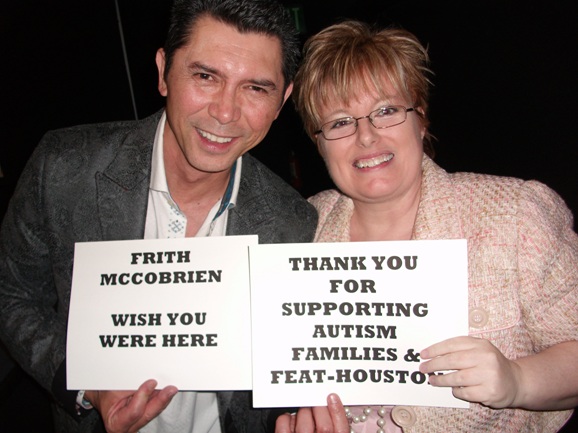
One of the highlights of the year was getting to personally meet Lou Diamond Phillips, Matt Kelly, Raul Inglis, and Glenn Morshower at a screening of the movie Transparency at the Dallas International Film Festival. The coolest part is, after asking if any of his Stargate Universe fans were in the audience, and we “woo-hooed”, he recognized my face from my avatar and said, “PBMOM—NICE.” It made a tired mom fighting for her kid with autism refreshed and ready to go back and fight round 2 part 2 with those people. Gentleman, you were so kind to us and just class acts. (Side note, word is that Transparency is being released in 2011, so stay tuned. It is a action-packed movie. All my autism moms should buy one because Lou Diamond Phillips happens to be on the Board of Directors of ACT-Today out in California and has been from the start. I’ve found many sweet videos on You Tube where he is with the kids on stage. So please support his career and buy a DVD when it comes out because he is helping families with autism. 


LDP & I raise funds for FEAT-Houston

 This is Matt Kelly:


Matt Kelly, the producer (and original script idea)


 This is Glenn Morshower and me: 

Mr. Glenn Morshower and me.

One of the best moments is when Patrick came and sat down on the bed beside me. He took his arm and tapped my chest and said, “Mom” — not the sign for “mom” but said “Mom” (not Ma as he would do in the past while biting his hand). Tears of joy. I have been having many of those moments recently.

The kidney stones and reduction of stress in my life might have worked hand-in-hand in helping me to lose 20 pounds, a full dress size, without any exercise.   A definite highlight. 

After 18 years, Jeff and I have rediscovered ourselves after all the distractions of the school district were gone. That in turn led us to rediscover our marriage.


PBMom & PBDad 18 years ago


 Looking forward, 2011 will be remarkable. Patrick has made astounding progress in just 4 months; the sky is the limit. We will try to cultivate his newfound love of running into perhaps fun runs and see what happens. Or perhaps his love of planting things.

I hope to get my production levels up at work so I can make a part-time wage again at the very least. I hope to lose another 20 pounds by the spring when I need to attend a fundraiser and I’d like to purchase a very sexy dress.

And then the laundry list (so to speak) by cleaning this house from top to bottom.

And, joy of joy, for the first time, since I do not have to spend 6 months fighting with the school district, I can actually get started on my tax returns like Saturday, January 1.

I expect also that in 2011 the kidney stone issue will be PERMANENTLY resolved.

 At the end of January, we’ll be meeting the lovely Women in Sci-Fi up in Plano, Texas, a weekend of respite for Jeff and me. They have a great lineup and I am looking forward to spending as much time as I am allowed with each of them. Last time we were only gone 27 hours; this time, we’ll be gone a full 48 hours. We’ll see how well Patrick does with that.

2011 is already blowing my mind. Can’t wait to welcome the baby New Year.

Do you have any resolutions for the new year? Are you glad that something is over in 2010 now? Do you have any traditions to share? Post them away in the comment section.

Happy New Year to you all. May the year 2011 be all that you make of it.  


Christmas Wishes

20 12 2010

As I sit down to eat Christmas dinner on December 25 with my husband and son, I will go through my 10 or more minutes of crying. When we recount our list of blessings, my list is usually long. This year, it will be even longer. I start off slow, thanking the Earth for the food, the people who planted it, grew it, harvested it, and transported it so that I could enjoy the meal of which I am about to partake. I make sure to thank the turkey for its life. Then the tears come–for the people who are going hungry, who are homeless, who are hopeless, and who are loveless. I may have helped some over the year, but did I do enough? Not likely. There is always more an individual can do. I gratefully acknowledge the people who have sacrificed their lives–our military and the quiet heroes of daily life. I say a blessing to those families who are grieving the death of a loved one; holidays can be the hardest times in their lives. Then I’ll begin to recount all the blessings currently in my own life.

This year I want for nothing, okay maybe except the Adam Lambert new acoustic CD and an announcement that Stargate Universe has been picked up by another network, but all-in-all, I have everything I could ever need or want. My son is thriving at the private school (and we found a funding source for it). The enormous stress of fighting a corrupt school district is gone. I have a husband who loves me and has for almost 20 years now despite seeing the deepest, darkest places of my soul. I have a wonderful golden retriever. I have a loving family, a roof over my head in a fantastic area to live, food in my stomach, a decent car to drive, great neighbors, wonderful friends, and an employer who is continuing to let me try to work each day as much as I can instead of filing for disability. Of course our retirement account was reduced to a 201K from a 401K after the economic meltdown as was everyone else’s, but Patrick’s autism expenses pretty much ate up the rest of it. Somehow I know we will be okay. While I might moan and complain about circumstances every now and again, a swift kick to my rear brings about enormous perspective.

The things I have on my Christmas wish list require the cooperation of others in order to achieve:

1. World peace. Sounds corny, I know, but I’m an idealistic fool who thinks this is actually possible. Before that happens, we will have to get rid of prejudice and hate. In order to get rid of prejudice and hate, we need better educated people.

2. End to hunger: With all the food we have and waste every day, we could feed the world.

End Hunger

3. A cure for autism: Just because I love my son and accept his diagnosis, doesn’t mean I would not want to make life easier for him, and for other parents not to have to even take this journey. The life lessons have been tremendous, but at what cost?

While I am waiting for those things to happen, I will continue to try to do my part, helping one person at a time, one day at a time.

People tend to store their “good will towards men” for just the Christmas season. As they pack away the Christmas decorations, the spirit of Christmas leaves them as well. Perhaps I should dream smaller. Perhaps my ultimate Christmas wish is for others to find the heart of Christmas in their daily lives and keep that siren song alive year-round. Instead of the 12 days of Christmas, we would sing the joys of 365 days of Christmas. Can you imagine what an astounding force of nature we as a people would be?


Patrick Turns 15

17 12 2010

At 11:57 a.m. today, December 17, Patrick will turn 15 years of age. It is a day worth celebrating, especially given the progress he has made since his diagnosis of autism when he was about 18 months of age. There were times then he retreated into a world of almost catatonia, where a low hum was the only sound coming from him. We used to call it his mantra chant. The path has been fraught with ups and downs. We were like ants on a mountain, fighting for every piece of territory gained, always being undermined by the elements. A parent would not give up on their child if they had cancer; they would seek out whatever treatment their child needed regardless of whether or not it was covered by insurance, regardless whether or not it would lead them to bankruptcy. Such is true of parents with kids with autism. The only difference is that the cancer (the autism) is a lifelong battle.

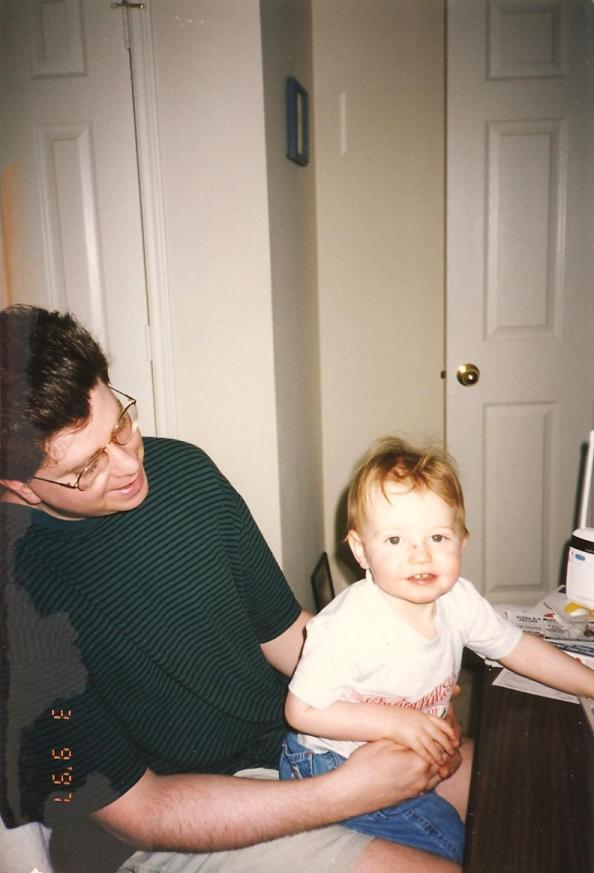
Patrick as a baby


True to our beliefs, we have mostly lived in the present for Patrick. I stopped blaming myself for his autism. They were not all happy days, especially during 2004-2010 when we battled the school district for every little thing; anger was the only thing to which they responded, so we used whatever was in our arsenal to help Patrick.

I cannot help by feel incredibly blessed by the miracle that happened to us. We made the decision to cut the school district out of his life, especially after listening to some digital voice recordings we made over the summer to see exactly what was going on in his classroom. Two teachers engaged in extremely unethical behavior. We had planned to homeschool him, but an opportunity arose for him to attend a private school in the area. In just a matter of 9 days, they accomplished more than the school district did in 6 years. I love the shock and awe coming from my friends and family as they witness his metamorphosis. In this Christmas season, it is the second best Christmas present we have ever gotten, the first being my son’s birth.

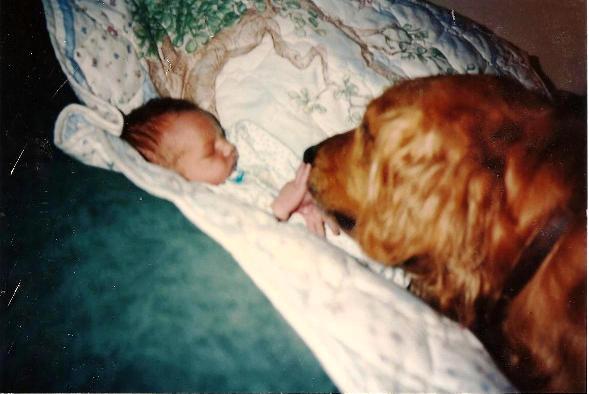
Patrick's first day home; getting acquainted with Sam, our golden.

We would not be good parents, however, if we did not think of Patrick’s future in some shape. In the climate of the current state of affairs in Texas, it does not look bright. There are some very grim statistics: Approximately 70% of kids with autism like my son (especially those who are considered nonverbal) will be sexually abused in their lifetime. Texas has the distinction of the notorious “Fight Clubs” in state institutions where the residents were made to fight each other for the entertainment of staff. In a report dated December 1, 2008, the Department of Justice sent a letter to Governor Rick Perry about their investigative findings. Texas lawmakers have known about the abuses and deaths in the system for years and never did a thing about it–until the DOJ threatened to cut off federal funding. In their report, they noted that between the fiscal year 2004 and the current investigation of 2008 more than 800 employees across all 13 facilities that serve nearly 4600 residents had been suspended or fired for abuse, neglect or exploitation of the residents. Over 200 had been fired in just the year 2007 and another 200 had been fired in 2006. Fifty-three residents in the state facilities died in just the year 2008. The state took legislative action, but things have actually worsened.

Our extended family all live out of state. As we age, so do our siblings. We cannot ask the children born to our siblings to take on the responsibility of taking care of Patrick as he ages if we are no longer capable of doing so. The sheer amount of information that would be required of them to understand is mind-boggling. The second hindrance is that the money does not follow the person. For example, if my husband and I were to die, if someone in the family decided to take on the responsibility of care, they would have to leave him in the state of Texas. If they took him to another state, he would go on the bottom of whatever waiting list that state had. It took 10 years for my son to get off the waiting lists in Texas; with funding about to be cut this year, the people still on the wait list are going to have to endure even longer waits. If we decided to leave this state to be closer to family, the same problem occurs.

People with disabilities face job discrimination. In November 2010, the Department of Labor released a report on job statistics for people with disabilities. The percentage of people with disabilities in the labor force was 21.5. By comparison, the percentage of persons with no disability in the labor force was 69.8. The unemployment rate for those with disabilities was 14.5 percent, compared with 9.1 percent for persons with no disability, not seasonally adjusted.

Stereotypes of the homeless and unemployed plague people with disabilities. Too many people conjure up in their minds a drunk or drug-filled person who chooses to live the lifestyle they do. In fact, in 2008 more than 40% of the homeless are people with disabilities. These stereotypes lead to cuts in state and federal funding that could help these people become contributing tax-paying citizens.

It is unlikely that Patrick will ever be on a cognitive level to ever become a father as he can barely care for himself. If Patrick was a girl, I would be able to obtain birth control pills to protect from the incidents of sexual abuse that might lead to pregnancy. Because he is a boy, a vasectomy as a method of birth control is considered controversial. This is different from the controversy of routine sterilization of people with disabilities in the past.

All these things lead my husband and me to the conclusion that we have to outlive our son. If we do not, there will be no one to protect him.

Me and Patrick; I could look at him all day.

As we celebrate all of his accomplishments today and rejoice in remembering the day of his birth, we keep a wary eye on his future.

Autism Awareness